
Brainspotting
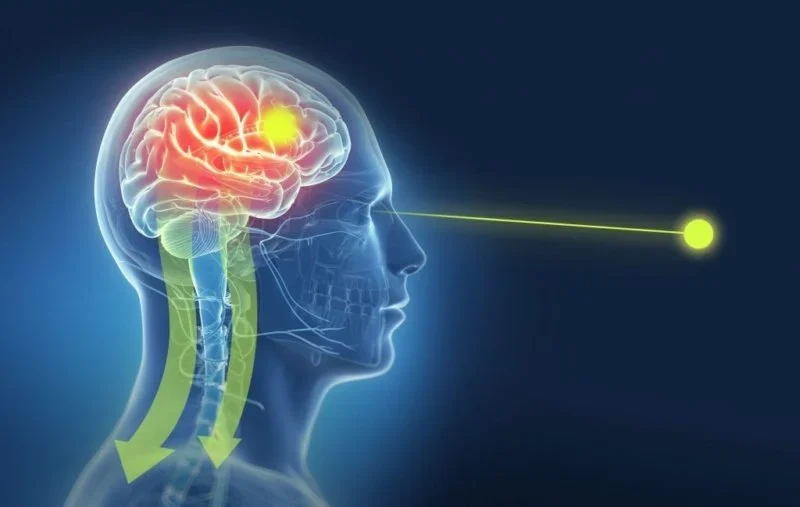

Brainspotting is a focused, body-based therapy approach that helps individuals identify, process, and release deeply held emotional and physical responses connected to trauma, stress, dissociation, and other difficult experiences. It is based on the understanding that our bodies and brains can hold onto experiences that may be difficult to access through traditional talk therapy or conscious thought alone.
Brainspotting uses a person’s field of vision to help identify specific points, or “brainspots,” that may be connected to emotionally or physically charged experiences. With the support of a trained therapist, clients are guided to focus on these points while gently noticing and processing the thoughts, emotions, sensations, or memories that arise. BioLateral Sound may also be incorporated to support the processing experience.
At its core, Brainspotting works with the brain and body’s natural capacity for healing. Rather than relying solely on language and conscious awareness, the approach engages deeper areas of the brain and the body’s nervous system. This can provide access to experiences and patterns that may feel difficult to explain or understand through words alone.
Brainspotting does not replace the importance of a safe, trusting therapeutic relationship. Healing begins with feeling heard, accepted, and supported. Within that relationship, Brainspotting provides an additional tool to help clients work through experiences at a deeper level and move toward greater emotional regulation, understanding, and healing.
“Brainspotting is based on the profound attunement of the therapist with the patient, finding a somatic cue and extinguishing it by down-regulating the amygdala. It isn’t just PNS (Parasympathetic Nervous System) activation that is facilitated; it is homeostasis”

-Robert Scaer, MD, Medical Director of Rehabilitation Services at the Mapleton Center in Boulder, Colorado, “The Trauma Spectrum”

Nicole Fetner: Our Brainspotting Expert
How it works
Brainspotting is a focused, body-based therapy approach that uses the client’s visual field to help identify and process experiences held in the deeper, subcortical areas of the brain. Brainspotting is based on the principle that “where you look affects how you feel.” Specific eye positions can be connected to the way the brain and body organize around emotionally or physically charged experiences.
With the guidance of a trained Brainspotting therapist, clients are supported in identifying a “brainspot”—a particular point in their visual field that may be connected to an unprocessed experience, emotion, or body sensation. By maintaining gentle, focused attention on that point, clients can begin to access and process experiences that may be difficult to reach through conscious thought and language alone.
Brainspotting works with both the brain and the body, allowing therapy to move beyond simply talking about an experience. It is designed to support processing from the inside out and from the bottom up, engaging deeper emotional and physiological responses. BioLateral Sound may also be incorporated to further support the processing experience.
Brainspotting can be used as a primary treatment approach or integrated with other therapeutic modalities. It can also be used to identify and strengthen sources of resilience, natural resources, performance, and creativity.
What to expect in a session
A Brainspotting session begins with the same foundation as any therapeutic experience: a safe, supportive, and trusting relationship with your therapist. Your therapist will work collaboratively with you to understand what you would like to address and help you identify an experience, emotion, or body sensation that feels important to explore.
During the session, your therapist may guide your attention across your visual field to identify an eye position that feels connected to the experience you are working with. Once a brainspot is identified, you will be invited to gently focus your attention there while noticing what happens internally.
You may experience thoughts, emotions, memories, physical sensations, images, or other responses during the process. There is no requirement to explain or talk through everything that comes up. Your therapist will provide support and guidance while allowing your brain and body to move through the process at a pace that feels manageable for you.
Brainspotting is a focused but contained approach, and your therapist remains present with you throughout the experience. Sessions may incorporate BioLateral Sound and can be adapted to meet your individual needs and therapeutic goals.

Benefits of Brainspotting
Brainspotting may be helpful for individuals who want to explore experiences and patterns that feel difficult to access through traditional talk therapy. Potential benefits may include:
Processing unresolved or traumatic experiences
Supporting emotional regulation and nervous system awareness
Working with anxiety, depression, and stress-related symptoms
Exploring physical sensations connected to emotional experiences
Addressing relational and interpersonal difficulties
Accessing emotions, memories, or experiences that may be difficult to put into words
Strengthening natural resources, resilience, and a sense of internal safety
Supporting greater awareness of the connection between the brain and body
Integrating deeper emotional and body-based processing into traditional therapy
Supporting performance, creativity, and personal growth
Providing an additional therapeutic approach for individuals who feel stuck in traditional talk therapy
Brainspotting can be used with people who are new to therapy as well as those who have participated in therapy before and are looking for an additional approach to support their healing. Your therapist can determine together with you whether Brainspotting may be a good fit for your goals and needs.
